
April 2016
HOW TO SPEND A WEEK IN LONDON
How to spend a week in London. Having mostly travelled in developing countries on a shoestring budget of duct tape and hope, I want desperately to end that headline with, “without breaking the bank” or “on a backpacker’s budget.” But London is expensive, and over a week in this impressive world-class city being cheap didn’t work out well for me for the first time in my life. Turns out, there isn’t always a way out of opening your wallet.

But when you’re in London, go big or go home. It’s an economic and cultural centre of the world; a crossroads between the West and everywhere else. There are few places you can hear more than a dozen languages in the time it takes to walk a city block, and as the late great 18th century writer Samuel Johnson once said, “When a man is tired of London he is tired of life.” True enough, London is the U.K.’s answer to New York City. The downtown never sleeps and its sidewalks are teeming with unbearably fashionable people who all seem to be going somewhere important. The rumble is constant and the city is always hungry.
Make no mistake — this post almost certainly will not offer any unique tips for travelling London as the online resources are substantial. But if you’re interested the ramblings of a journalist who has lived in colonized countries, and for the first time, is visiting their colonizer, do read on. I promise at least a handful of colourful, unsolicited opinions you won’t find on TripAdvisor or Lonely Planet.
Day One: A bull in a China shop
London had never been high on my list of places to see, at least not while I had youth, foolishness and a minimum wage salary. But in April, an opportunity to visit with free accommodations landed in my lap, and I couldn’t say no to watching my sweet, suburban mother navigate an unknown European metropolis.
We landed at Heathrow early in the morning with red eyes and matted pillow hair. Construction and 10 hours of jet lag made navigation from the airport a bit tricky, but when we finally got to our hotel on The Strand, I was even more out of my element. My rubber travel flats — worn in and stained by Africa — seemed tasteless next to the Cole Haans and Michael Kors pumps pattering on the sidewalks around me, and I felt a sudden urge to cache my gas station sunglasses and $16-hand bag. I felt like a bull in a China shop not in the sense that I would break things, but in the sense that I was somewhere I wasn’t sure I belonged: downtown London.

TRAFALGAR SQUARE
Trafalgar Square became home base. Located in the heart of the city centre, nearly everything you’ll want to see is either within walking distance from its emblematic Landseer Lions or a short ride away on the tube. It’s a great place to start.
The square, of course, is full of history — a central meeting place since the Middle Ages. It’s remarkable how little has changed; today it serves as a rendezvous for cooing lovebirds, co-workers lunching on take-out paninis and tourists testing their selfie sticks. Its statues of famous 19th century kings and military men are the glorious subject of climbing competitions for students on field trips, and its corners, a mecca for collectors of poorly-made snow globes, magnets and bottle openers.

What I loved most about Trafalgar Square was not its historical significance however, nor the street performer in a levitating Yoda costume (although he was a close second), but the feeling of being at the cosmopolitan heart of the Western world. You can close your eyes and pick any direction, and inevitably end up on a colourful, vibrant street of unique architecture and buildings of diplomatic significance. Central London has a kind of bustling diversity that in many ways, knows no equal.


PICADILLY CIRCUS, SOHO, LEICESTER SQUARE
We walked northwest to Picadilly Circus, which in the 1800s, was considered London’s version of Times Square. The active junction was home to the city’s first electronic billboards and today, packs the commercial punch of substandard clothing shops, a couple major banks, a massive Coca-Cola ad, and tacky souvenir stalls. It’s interesting to look at, but unless you’ve got time to spare, you’d best to push onto the far more interesting areas of Soho and Leicester Square.
The latter is London’s theatre district, plastered with sparkling advertisements for the latest showings of Book of Mormon, Wicked, Thriller and The Lion King. Here, you’ll find the bronze handprint casts of A-listers like Tom Cruise, Bruce Willis and Sir Ian McKellen, and statues commemorating giants like Charlie Chaplin, Hogarth, and William Shakespeare (also check out Chinatown a little further north on Charing Cross Road).
West of the square is Soho, an edgy fringe neighbourhood that unabashedly oozes sleaze from every kink, costume, and sex shop. It’s a marvellous place to drink, people-watch and shop, its boutiques piled high with everything from steampunk paraphernalia to penis enlargers. Soho also has some of the best food trucks, gay bars and buskers in London, who put out their hats in polite competition with one another as the area lights up at night. I came back to the neighbourhood at least three times during the week, never having really felt like I had seen it all.

NATIONAL ART GALLERY
The National Art Gallery in Trafalgar Square was a great, low-key ending to our first day. I was truly blown away by its impressive collection of more than 2,000 paintings ranging from the 12th to early 20th century, and surprised to even recognize some of them from the 1970 Masterpiece board game. These paintings are famous around the world (I had to elbow my way into catching a glimpse of Van Gogh’s Sunflowers), but I was most taken by the gallery’s early religious work by painters I had never heard of.

From the rock-hewn churches of Lalibela to the beautiful Blue Mosque in Istanbul, faith has inspired many of humanity’s most marvellous creations. And so it was for the Christian paintings in the National Art Gallery, which displayed an extraordinary level of intricacy in every single blade of grass, painted earring or patterned handkerchief. To think such fine colours and brush work were produced centuries ago with bone, horse hair and candlelight — I wouldn’t be surprised if most of these paintings took a decade or more to complete. Allocate at least two to three hours for the gallery, admission to which is free.
Day Two: The wealth of an empire
Still groggy from jet lag, we hemmed and hawed over taking one of those iconic red doubledecker tour buses for our second day in London. The idea of adding 30,000 paces to the step counter wasn’t particularly appealing, but neither was the £20 to £60-price tag of an excursion. Frugality won the day.
CHANGING OF THE GUARD
We caught the famous Changing of the Guard at Horse Guards Parade at 11 a.m. It’s less crowded than the ceremony at Buckingham Palace, but I’d still show up early if you want anything more than pictures of the back of someone’s head. The Changing of the Guard is a symbolic ritual indeed; elite soldiers have guarded the royals for more than 500 years. Unfortunately, the exchange is not particularly spectacular and unless you’re bent on trying to make one of the stoic bearskin-hatted officers crack a smile, this is an attraction you might want to skip if you’re tight on time.


While you’re at the Horse Guards Parade however, stop by 10 Downing Street, the residence of the British prime minister, located only a few metres south of the ceremony. If you’re lucky, like we were, you may catch a glimpse of the prime minister (at the time of writing, David Cameron) in his motorcade as he starts the day’s work.


BIG BEN AND WESTMINSTER PALACE
A few minutes’ walk from the parade are two of London’s best-known landmarks: Big Ben and Westminster Palace, which you’ve probably seen getting blown up or flown over in the movies, or both. While the former is most fondly known to me as the place where Peter Pan and Wendy stopped before finding Neverland, the latter is best-known to all as the traditional sitting place of the U.K. Parliament, where the likes of Guy Fawkes and Nelson Mandela have boldly addressed British law-makers.
 Both Big Ben and Westminster Palace are magnificent and ornate. The dials of the massive clock, built and repaired during the mid-1800s, are seven metres each in diameter, while the minute hands are 4.2 metres long and weigh about 100 kilograms. The Houses of Parliament, whose history spans 900 years back to the Anglo-Saxon kings, are equally impressive, and in my humble opinion, far more interesting to look at than the Queen’s own residence, Buckingham Palace. They also make the Canadian Parliament Buildings look like the Lego handiwork of a 12-year-old.
It was in the presence of such grandeur that I realized what hundreds of years of being on top of the world gets you — glorious buildings, plated with fine metals and gold. Big Ben and Westminster Palace were built on the wealth of an empire, the most powerful colonizing force the modern world has ever seen. This is what winning the historical lottery looks like, century after century after century. Most countries have not been so lucky, nor so empowered.


ST. JAMES’S PARK AND BUCKINGHAM PALACE
Thoughts of colonization, wealth and power wandered freely through my mind during the picturesque walk through St. James’s Park, which covers nearly 60 acres of London’s downtown core. The green space is home to a robust population of pelicans, water birds, woodpeckers and bats, and while it has many royal, political and literary associations, today it mostly serves as a serene place to have lunch and escape the traffic of surrounding streets.
We followed the park’s famous ‘Birdcage Walk’ east until we reached the footsteps of Buckingham Palace, the official home of the U.K.’s sovereigns since 1837. The royal residence — instantly recognizable as the backdrop of decades of news coverage — has 775 rooms, including 19 State rooms, 52 royal and guest bedrooms, 188 staff bedrooms, 92 offices and 78 bathrooms.
We happened to be in London only days before the Queen’s 90th birthday on April 21, which meant the monarch herself was in residence on the afternoon of our visit. No visitors were permitted inside the castle, so we spent a little extra time tiptoeing through the tulip gardens, the Victoria Memorial and Canada Gate.


WESTMINSTER ABBEY
We had lunch at the dank Westminster Pub east of Buckingham Palace. Aside from airfare (accommodations were free), we spent more money on food than anything else in London, and my chicken sandwich there cost the equivalent of CAD 20. Less than 20 minutes later, I learned the entrance fee to Westminster Abbey was another £20 per person and included a strict photography ban. Peeved by the combination, I reluctantly opened my wallet and capped my lens. This was London.
But Westminster Abbey was worth it — an impressive tribute to more than 3,000 of England’s most important royals, statesmen and soldiers; poets, priests, heroes and villains. Oddly enough for a church, scientists like Isaac Newton and Charles Darwin are among those commemorated there, along with novelist Jane Austen. It’s the coronation, burial and wedding site of British monarchs past and present, including King Richard I, Anne Boleyn, Queen Elizabeth I, William the Conqueror, and Mary Queen of Scots.
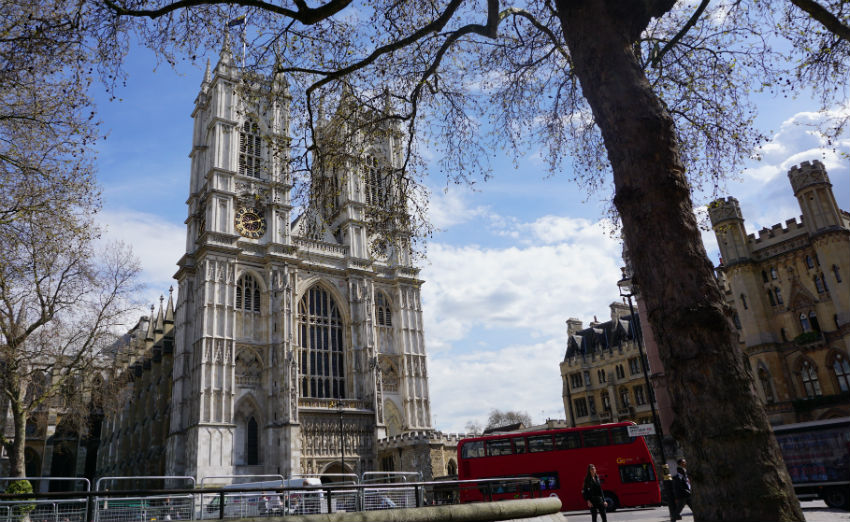
It was strange to see the important people I had read about in books lying before me in marble tombs. At first, it gave me goosebumps, but then I found myself feeling angry. Many of those buried in Westminster Abbey were honoured for their role in bloodshed — expanding the British empire through war. The list of innocent lives taken by those etched into its walls could fill stacks of books, and I wondered why we continue to venerate these leaders as heroes? The abbey is infallible proof that history is written by the victors. So few women and racialized people are commemorated on its walls, I wonder how much information are we missing about our past as we continue to consult historical records produced by the male elite?
THE QUEEN’S WALK AND LONDON EYE

I spent the remaining hours of the day trying to clear my head. We strolled down the Queen’s Walk, which took us over Westminster Bridge along the south bank of the River Thames. We passed kitschy tourist shops, cafés, restaurants, museums, and show booths. All that was missing was a Ripley’s Believe it or Not Museum and a Rainforest Café.
The path took us to the London Eye, an overpriced ferris wheel with a spectacular £20-per-person view of the city. We skipped it. Our feet were sore, our jet lag was catching up to us and we went to bed after an exhausting day.


Day Three: A delicious taste of residential London
TOWER OF LONDON
We woke up early on Day 3 to be first in line for the Tower of London. I hoped to start with a fresher outlook on the city than the previous day had ended on. Admission is £22.50 per adult, but advertised as £25 at the gate to include a voluntary donation for maintenance. If you want to opt out, make sure you voice this at the ticket booth. The attraction is definitely worth the cash, and as an added bonus, offers lovely views of Tower Bridge, often mistake for the London Bridge.

We took the tube to the ancient fortress built in 1066 by William the Conqueror. For a thousand years, the tower has been a prison for murderers, thieves, disgraced royals and enemies of the State, many of whom escaped, died or disappeared under mysterious circumstances. The enclosure includes jail cells, torture chambers and the last words of convicts etched into its walls. It’s the famous execution site of Anne Boleyn and Lady Jane Grey, and the place where Guy Fawkes was tortured for his failed Gunpowder Plot to assassinate James I and blow up Parliament.
Today, the tower houses an impressive collection of ancient armour, a curious life-sized metal dragon and an exhibit detailing Britain’s military involvement around the world. It also houses the bonafide Crown Jewels, which are guarded around the clock by its iconic Yeoman Warders, also known globally as the uniformed soldiers on the Beefeater gin bottle.
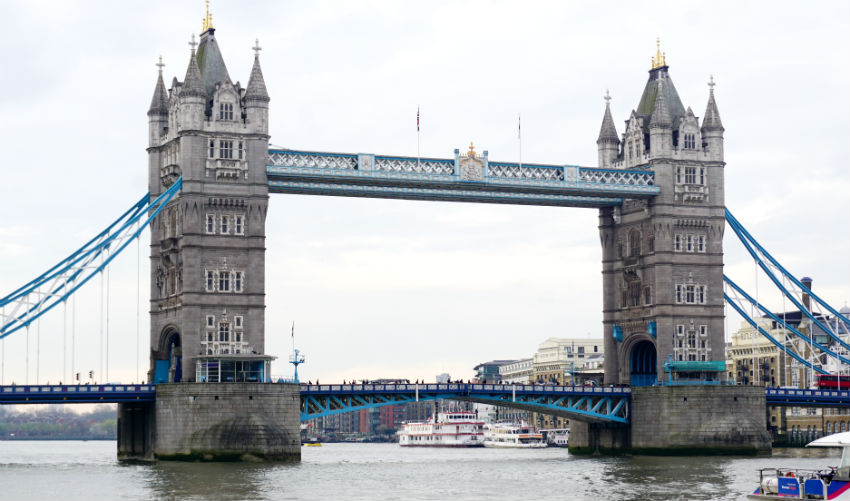
But far from the caricatured gin bottle, the Warders are an elite force of women and men who have served a minimum of 22 years in the British forces. Today’s contingent includes veterans of the Falklands War, Bosnia and Afghanistan, among other conflicts. While the Tower of London website boasts, “They are happy to answer your questions about the Tower and are some of the most photographed guards in London!”, the guard I spoke to seemed less than thrilled to be escorting noisy school children around the property, after what I can only assume was an action-packed career. He answered my questions politely, but I detected an air of longing for the “good old days” in his voice.

BRICK LANE MARKET
After waving goodbye to our new friend — who bade us farewell with a bit of a weak smile — we walked half an hour through Whitechapel to the Brick Lane Market. I was happy to get closer to residential London, away from traffic and souvenir shops. We passed what appeared to be the shiny, financial district before ending up in a neighbourhood lined with electronics, cookware, trade and food stores. Unlike Charing Cross or Soho, here, garbage was a feature of the sidewalks, along with graffiti and busted red telephone booths.

Arabic shop signs switched to Bengali as we arrived at Brick Lane Market. Affectionately known as ‘Banglatown’ to many Londoners, it was once a slum and the heart of Jack the Ripper territory. The area has served as a revolving door community for newcomers since the 15th century, including French, Irish and Jewish immigrants, but today, the Bangladeshi rule with dozens of saffron chicken and curry houses, each proclaiming to have the “best curry in Brick Lane Market.”
If the curry doesn’t tempt you, there are a dozen phenomenal cafés and food trucks nearby selling a variety of organic, vegetarian, and not-so-vegetarian dishes (featured that day, double deep-fried drumsticks). Squeezed in between this part of the strip are secondhand book shops and vintage clothing stores. The latter either makes you question everything you think you know about fashion or irrefutably confirms it.
From the wafting smells of curry to the record shops; from the luxury chocolate boutique to the stunning graffiti on the walls, Brick Lane Market was definitely a highlight of London. It was classic, hipster, cultural and questionable all at the same time and is not to be missed on your trip.

SPITALFIELDS MARKET
If you didn’t find what you were looking for at Brick Lane, the Spitalfields Market is less than a kilometre west and an interesting place to peruse for hidden treasure. The massive bazaar specializes in antiques, selling everything from broken cutlery to government war bonds. Row upon row, its tables proudly display old buttons of every imaginable variety, outfits from the 1920s, telephones from the 1930s, vintage cigarette tins, sewing machines and more. A set of black and white photos from Michael Jackson’s Thriller video caught my eye, and as a diehard fan since the age of 10, I quickly asked how much. “£99 each,” the vendor told me, adding a “let me explain” upon reading my expression.
As it turns out, the young man’s father was a famous freelance photographer and his photos of MJ — sporting part of his Thriller monster mask — were one of a kind. The father had not been commissioned to shoot the music video, snuck undercover onto the 1982 set, and managed to capture MJ in a moment of transition that every other photographer had missed as he went from human to werewolf. I thanked the young man for his story, and wistfully admired the rest of the photos, which included stills of Iman, Sean Connery, Meryl Streep, and others.

ST. PAUL’S CATHEDRAL
After lunch we took the tube in the pouring rain to St. Paul’s Cathedral, north of the River Thames. We didn’t have a map but we couldn’t miss it — at 111 metres in height, the cathedral dome has dominated the neighbourhood’s skyline for years, and its massive front steps are somewhat reminiscent of the Lincoln Memorial in Washington, D.C.
 The church is equally stunning on the inside, with a ceiling adorned in brilliant gold and navy blue paintings of famous parables from the Bible. Its history dates as far back as 604 A.D. (when the first version was built), but its more recent editions have hosted funerals for the Duke of Wellington and Sir Winston Churchill. The cathedral has also been the site of celebrations for the 2012 London Olympic Games, Queen Victoria’s Jubilee, the end of the First and Second World Wars, and the wedding of Prince Charles to Princess Diana.
Unfortunately, we arrived 40 minutes before closing time (4:30 p.m. during the week) and cathedral staff recommend reserving at least two hours for a tour of the entire church. There was also the matter of the £18 pound entrance fee which, like Westminster Abbey, came with a ban on photography. I decided it wasn’t worth it given our time constraint, but you may disagree.
THE MUSEUM OF LONDON
The Museum of London was a pleasant surprise. It wasn’t originally in our itinerary, but with a few hours left in the day and St. Paul’s Cathedral crossed off the list, it was the nearest attraction that was still open to visitors. We walked over, entered for free, and started what would ultimately be a very informative journey through London’s history between 450,000 B.C. and 2012.
The museum is organized chronologically with interactive exhibits displaying everything from prehistoric relics found in the area to immigrant-inspired fashion in the cosmopolitan city that was built there hundreds of thousands of years later. It examines London’s history through the context of class and race discrimination, and through hallmark events like the Great Fire of 1666, and the terrorist attacks in 2005. I was impressed and pleased to have stumbled upon a free, fantastic way to spend two hours, but if you’re pressed for time and have to be choosy about your museums, I would prioritize the British Museum over this one. Read below for details.
Day Four: Lessons for our children
THE BRITISH MUSEUM
If I had been travelling alone, I would have spend a full day — if not two — at the British Museum, whose permanent collection of roughly 8 million works is among the largest and most comprehensive in existence. Its historical, artistic, and cultural exhibits document the story of human life from across all continents. I couldn’t believe it was free.
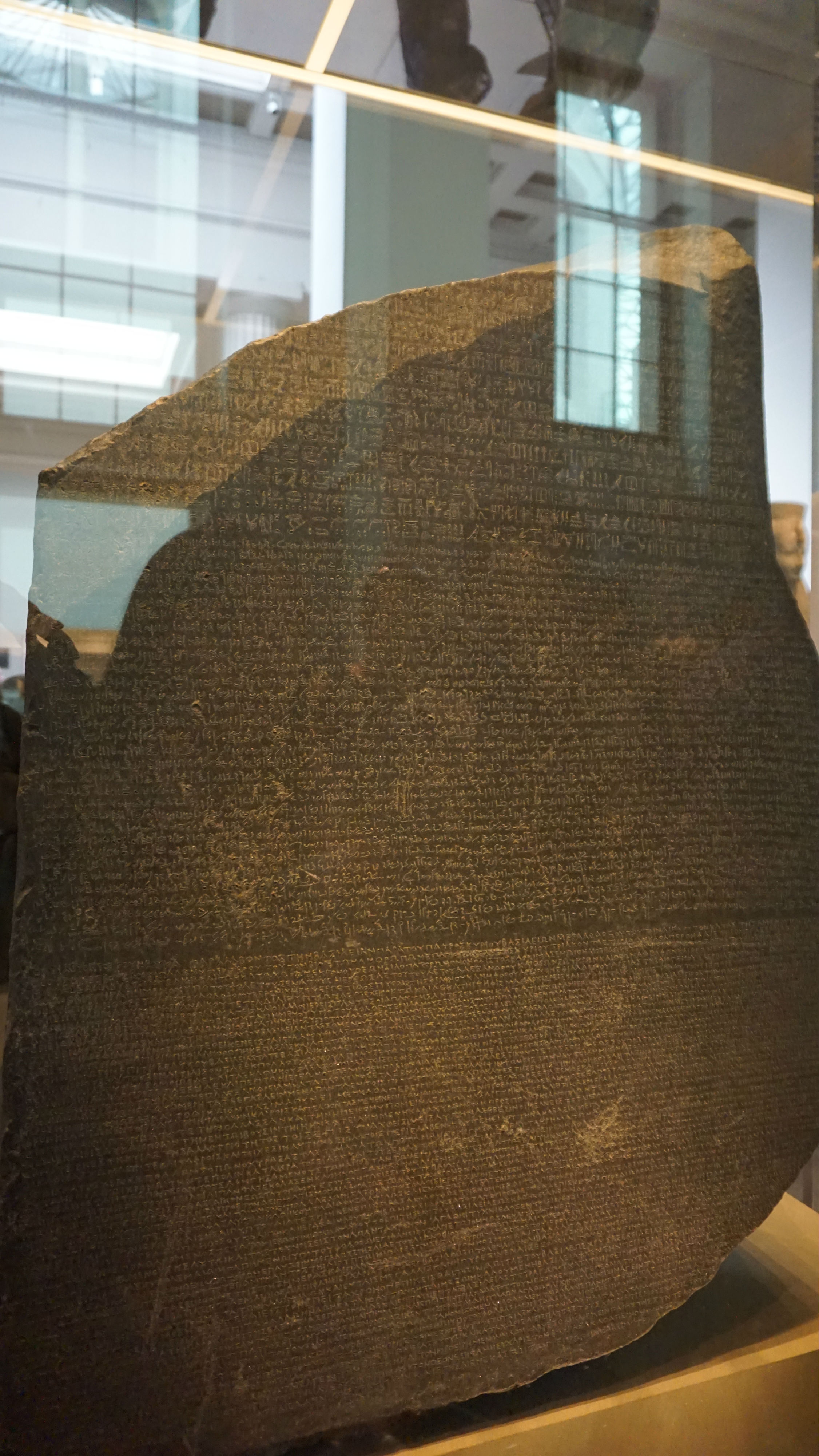
Be warned — enter not the British Museum if you can’t stand crowds, noise and competing for space against dozens of school students filling out scavenger hunts, noses pressed against artifacts that have existed since before humans started counting time. I know complaining about congestion in London is a losing battle, but it’s tough to bask in the ambiance the Rosetta Stone — the key to deciphering of Egyptian hieroglyphs from 196 A.D. — when a group of Grade 8 girls are taking selfies in front of it. If you’d like to experience these treasures with a little more privacy, try visiting during the museum’s late-night hours on Friday.
Despite these minor, nit-picky setbacks, the British Museum was everything I had hoped for and more. In truth, walking through its exhibits (containing an impressive 85 rooms) was like having a bucket of ice water dumped on my head: All of a sudden, I realized how narrow my understanding of the world had been. Growing up in a fairly cookie-cutter Western family, I never grasped how strongly the caucasian Christian narratives had shaped my paradigm through broadly-used terms like “before Christ,” and “after Christ,” which tend to centre the human story around a few events that happened in a very small portion of the world. But at the museum, faced with bits and pieces of civilizations that rose and fell thousands of years before Christ, I realized there was so much more ‘world’ I didn’t even know I didn’t know.

As a writer, I was particularly fascinated by the Library of Ashurbanipal, the oldest surviving royal library in the world, whose ancient stone tablets — etched with magic spells, medical and divinatory texts — date back to the Assyrian kingdom of Upper Mesopotamia (now Iran) in 630 B.C. Other highlights included the mummy of Cleopatra, the Parthenon sculptures, and a broken tablet from nearly 4,000 years ago describing the Babylonian flood story, now widely recognized as the Bible story of ‘Noah’s Ark.’ While we’re on the subject of Eurocentric Christian influence, it’s worth noting that the story on the stone tablet involves multiple deities and a devotee named Atrahasis. I wonder how several millennia later, printed in the Bible, this became Noah and one Christian God.
As someone who lives on unceded land stolen from Indigenous peoples, I felt my anger bubbling up once more. Why, nowhere in the British Museum (at the time of this posting), is there any recognition of the horrors of England’s colonial past? No descriptions or signs acknowledging that most of these artifacts were forcefully ripped from the hands of people and great civilizations who were unable or unwilling to fight back?
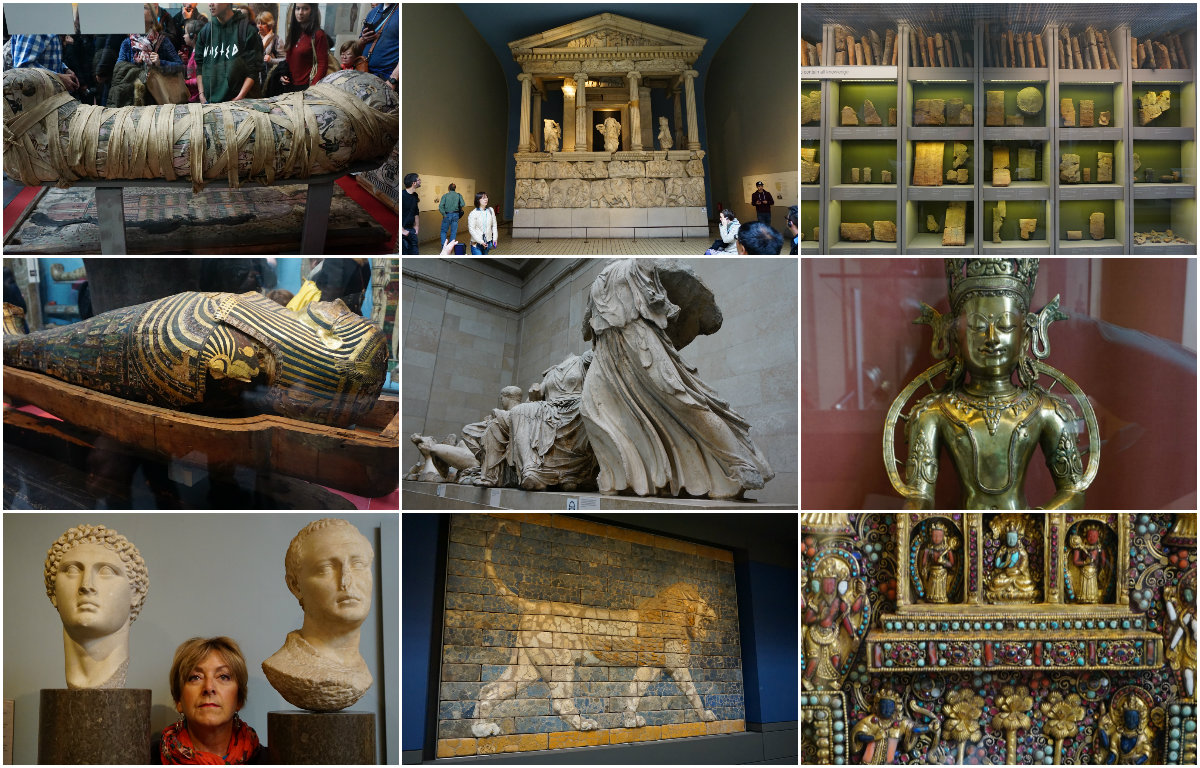
A 2014 article in The Guardian once labelled the museum’s colonial booty the “shame” of the art world, and many countries over the years have called for the British government to return these vital pieces of their past. Imposing today’s morals on actions of the past isn’t fair, but neither is ignoring them. Hundreds of school children filter through the museum each and every day — what kind of example do we set for them when we fail to acknowledge our own mistakes? Canada is only beginning its journey of atonement for cultural genocide, and if the British Museum won’t return repatriate some of its treasures, perhaps a sign acknowledging the true manner in which they were obtained would be appropriate.
Good riddance.
READ: Nine priceless artifacts museums should return to their home countries
Preservation or plunder? The battle over the British Museum’s Indigenous Australian show
COVENT GARDEN
After several enlightening hours at the British Museum, my mother dragged me away for our first ‘traditional’ English meal at the Plough Pub. We had craft beer, fish, chips, peas, mash, and steak and ale pie — the kind of greasy meal that lives on in your arteries afterward. Feeling full beyond a comfort, we took the tube back to the eastern fringes of London’s West End to a district called Covent Garden. It was a charming place to walk and shop (if you can afford it) and nearby attractions include the London Transport Museum, the Royal Opera House, and St. Martin-in-the-Fields Church.
I enjoyed the Covent Garden Market, a large, multi-floored complex of craft, clothing, jewellery, and cookware stores where I seriously considered buying a painting of Marvel and DC superheroes posing in a depiction of Christ’s Last Supper. I had been told by a friend of mine in London that this market represented an important part of the “history of shopping,” and I wasn’t surprised when a busking opera singer climbed onto the tables of the ground floor café in an attempt to charm customers into giving a little bit of extra cash.


THE WORKING MEN’S CLUB
To cap the day off with a bit more excitement, we rolled into a 90s party in Bethnal Green on a Friday night. In London’s East End, it’s off the beaten path for tourists. I had bought tickets while still in Canada to the party that night and assumed we would be headed to some kind of themed nightclub. I was wrong.
Far from a nightclub, the Working Men’s Club is more like a legion. We wouldn’t have found it in the dark at all had a small green light not been flashing from a tiny window next to the door. Inside, a small bar competed for space next to stacks of chairs and folding tables. Cheap birthday decorations plastered the walls and tables, which were topped with bowls of classic 90s candy like Fun Dip, Pixie Sticks, and Flying Saucers. Sitting alone at 9 p.m., we had some shots to pass the time, wondering if we had wasted our money.

Two hours later it was standing room only as dozens of young people bounced off the walls to TLC, Nirvana, Mack Daddy and The Up, dressed in a variety of vintage wear. I couldn’t remember the last time I danced so much. There were games of musical chairs, Twister, and pass the parcel — a true 90s birthday party. Despite the commotion, my mom and I were picked out as black sheep in the crowd, and we were asked a few times where we were from, what we were doing there, and how on earth we had managed to find out about the Working Men’s Club.
“If you were trying to get off the beaten track, you’ve succeeded,” said a young man from central London in between sips of beer, “I’m from here, and this is even out of my comfort zone.”
We left the ‘club’ around 1:30 a.m., swaying slightly with lollipops in our mouths and stickers on our clothes. We took the bus back to our hotel on The Strand, caught a ride from a bicycle taxi whose driver claimed to written music for everyone from Bon Jovi to The Beatles, and passed out dreaming about the Backstreet Boys.
Day Five: A terrifying glimpse of the high life
HARRODS
We dragged ourselves out of bed on our last full day in London. After a second visit to the British Museum (I had insisted), we took the tube to the world famous Harrods in Knightsbridge. However strongly you feel about the perils of consumerism — shelve it all for an hour to see this five-acre mall with 330 departments known for luxurious designer clothing, jewellery, pet accessories, house ware, food and drink.

‘Obscene’ is the word that comes to mind, taking the stairwells — flawlessly decorated in green and gold Egyptian motif — down to the food court. There you’ll find caviar worth more than £3,000, a cut of Kobe beef fillet with a price so shameful I can’t even speak it, and single macarons that cost the equivalent of a meal at the pub. Elsewhere, in the designer departments, staff are as much bouncers as they are sales associates, keeping like me from pawing £24,000-dresses with no intention to buy.


BOROUGH MARKET

We wrapped up our afternoon at the Borough Market, London’s oldest food market of more than 1,000 years. It was a crowded collection of artisan vendors from around the world, selling everything from top-notch Turkish delight to sweet, mulled wine from a wooden barrel — a smorgasbord of colours, smells, sounds, and tastes. We made our way slowly through the Saturday morning rush to sample all kinds of homemade food before making our way to the underwhelming London Bridge, less than a 10-minute walk away. It was a neat, relaxing way to kill an hour, but both are activities you could skip, particularly if you’ve already been to Tower Bridge and either the Brick Lane or Camden Markets.
Our exit from London was rather unceremonious — we took an apple and a chocolate bar from the hotel mini fridge and hauled our luggage onto the train to Windsor. The quaint town of Windsor was calling us.


Day Six: A royal ending
We woke up to an unexpectedly beautiful day in Windsor, roughly 40 kilometres east of London in beautiful Berkshire County. A cool breeze swept through its cobblestone streets as baristas laid out patio furniture and vendors set up racks of Will and Kate bobble heads in preparation for the morning’s rush. Face-painted buskers readied their balloons and magic tricks as decorative flags and flowers rippled gently in the wind. I smiled: despite heavy foot traffic from all over the world, Windsor has an undeniably charming, small-town feel.
WINDSOR CASTLE
As fate would have it, the Queen was in residence again during our visit to her second home — the older, more impressive Windsor Castle. We hit the entrance gate early to avoid lineups. Make sure you keep your stamped admission ticket, which for £20, covers a free return trip within the year. Windsor Castle is the oldest and largest inhabited castle in the world — the family home of British kings and queens for nearly 1,000 years. If you’re up early enough, you’ll catch the guards’ musical procession on your way into its magnificent gated compound, where you’ll have your last change for photos before entering the palace exhibitions (ugh, more photography bans).
Current exhibitions at the castle include Shakespeare in the Royal Library, an incredible collection of the playwright’s works, copied and bound for royalty in the 16th and 17 century. Beside the library is Queen Mary’s Dollhouse, the largest and most beautiful dollhouse in the world built between 1921 and 1924, which features functioning electric lights, and more than a dozen rooms complete with furniture, chamber pots, paintings, books, and real silver cookware. The little queen’s dolls — gifted to her by world leaders of the day — are equally impressive with outfits made from real ermine, leopard, and other exotic materials.
Most fascinating to me however, were the State Apartments and Semi-State Rooms — the most richly decorated rooms of the castle used for entertaining and formal affairs. Think tables of gold and silver, intricate upholstery, magnificent paintings, and tapestries larger than my whole apartment. Once again however, it’s worth pointing out the country’s enormous hesitancy to acknowledge its colonial past: In the castle’s exhibit of war and armour for example, gentle words like ‘obtained,’ ‘acquired,’ and ‘discovered’ are used in relation to military artifacts that came from imperial exploits in colonized or conquered countries. I humbly suggest that ‘seized’ and ‘stolen’ would, in many cases, be more accurate and appropriate terms in today’s political climate, even if public perception of the monarchy takes a slight dive.


THE LONG WALK
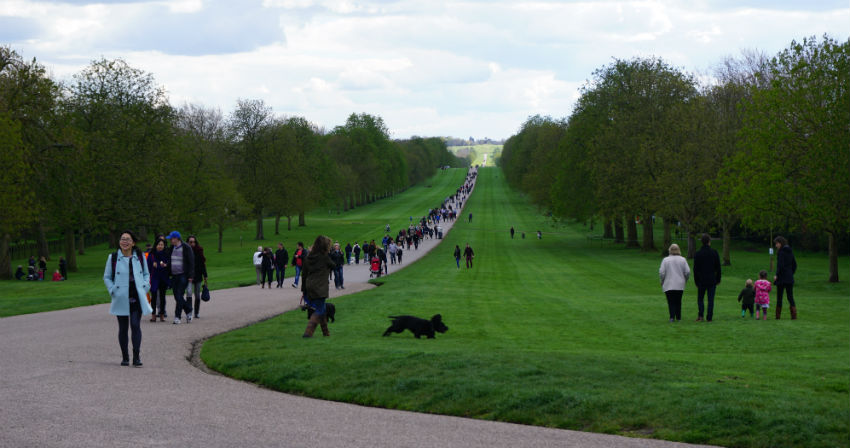
After the Windsor Castle, we made our way to the bright green, immaculately-kept Long Walk at the foot of the southern Copper Horse.
More than four kilometres in length, it’s still used by royal carriages on their way to the Ascot Races, but more than 500 years ago, King Henry VIII is said to have peered over the path awaiting news of his second wife’s execution at the Tower of London. It’s a popular place today for joggers and dog-walkers, and the beautifully-decorated Two Brewers Windsor pub near the entrance not only offers a great craft brew, but an interesting history lesson on it as well.
ETON COLLEGE
The walk from Windsor Castle across the River Thames into Eton is magnificent on a sunny day. Recreational boaters putted through glassy waters, and across the bridge, kitschy boutiques mark the way to the historic Eton College — a prestigious private school for boys founded in 1440. The school’s reputation, I soon learned, is exceeded only by academic results, and the institution has churned out hundreds of politicians, judges, academics, and senior members of the military over the decades, spawning much discussion of classism and elitism among modern Londoners.
All that prosperity, however, is juxtaposed against the aging of the town, whose book stores, bakeries, uniform and clothing shops appeared to be buckling under the weight of centuries, inching closer to the sidewalk every time someone slams a door. The Eton campus itself didn’t look much more stable — tiny bedrooms with tinier windows made electricity look like a recent addition to campus. It was easy picture the town a hundred years ago, when horse-drawn carriages roamed the streets, and the wooden buildings visible today stood just a little taller. The college charges up to £11,500 per term, with three terms in the academic year.

LEBANESE NIGHTS

We toasted the end of a successful week in England with fancy cocktails at Lebanese Nights, a highly-recommended mezze restaurant that looks more like a discoteca than a dining room. It was a Sunday evening, and we were sorry to hear we had just missed the bellydancers, who entertain guests on the weekends over massive hanging stacks of grilled kebab. The food was delicious and the prices, reasonable. The restaurant also offers electronic shisha for £15. We went to bed full, pored over the week’s photos, and reminisced about our favourite moments in one of the world’s most beloved cities.
Day Seven: Saying goodbye to England
It’s hard to leave a new country feeling like you’ve barely scratched the surface of what it has to offer, and it was difficult to leave England feeling like I hadn’t even really seen London. I would have liked to have spent more time absorbing chatting with locals, getting their take on the colonialism and imperialism that lingers in the country’s modern institutions. Do they see a need for change? Were my views too black and white? Did I lack the context and historical expertise to fairly evaluate what was before me?

By no means is England the world’s only colonizing country. In fact, many empires in their exploits have been bloodier, crueller, and less inclined to restore and support the societies they crushed. It’s also true that people were pillaging, killing and stealing from each other long before the English set sail. My intentions in this blog post are not to offend or blame anyone for past wrongdoings, merely to call attention to the need to do better. Formerly colonized countries and peoples all over the world are stepping up with demands for the Western world, and it’s time for real accountability and inclusion. No one can erase the mistakes of the past, but we can acknowledge them as a stepping stone toward reconciliation.
I had a great time in London and I’m sure I’ll be back one day with a bigger wallet, a bigger backpack, and a much bigger adventure in mind.
Know Before You Go — London
Travel Tips
- London is very walkable, so do as much of it as possible! Pick up an Oyster card at the airport to access the tube and bus systems at a cheaper rate. No need for cabs.
- Maps, posted signage and friendly residents will get you almost anywhere you need to go, so don’t worry about buying a local SIM card and connecting to GPS or Internet.
- London has a surprising number of free attractions, so keep them in mind on your list.
What We Missed
- Camden Market
- A plate of Indian food in Southam
- Victoria and Albert Museum
- Tate Modern
- A musical in Leicester Square

 Elizabeth Around the World
Nicee blog