August 2018
A SWISS REUNION
I arrived in Zurich with a carry-on bag, running late, on the morning of Aug. 5, 2018. My connecting flight was delayed due to a power outage, and with no way to contact my friend in the city, I stood alone at the Zurich train station, searching awkwardly for WiFi.

I hadn’t seen Nathan in several years; he was busy singing opera on some of the world’s most prestigious stages and living a way cooler life than I. We first met nearly 15 years earlier, both cast in a stage production of the musical Anything Goes, and had been close friends ever since. Switzerland was now home for Nathan and a scenic place to have a reunion.
It was the starting point for a two-week trip through central and southeastern Europe, beginning in Zurich and ending in Munich via Austria, Slovenia, Croatia and Bosnia. A train to Hautplatz and two buses later, I arrived at Nathan’s sun-filled apartment. It was hard to believe that just 48 hours earlier, I had risen on an Indigenous reserve in rural, northern Canada and driven four hours west to the nearest international airport — our reunion was long overdue.
Day One: The Grand Tour of Zurich
By strides, Zurich is the most impeccably clean place I’ve ever been. It would take effort to find a piece of litter, I thought, wondering how much of its annual operations budget was dedicated to street-cleaning. Others, evidently, have asked the same question and gone to the trouble of answering it here.
 WEALTH AND WATER
Its spotless downtown quarter was quiet on a Sunday morning. Even Bahnhofstrausse, one of the most expensive shopping avenues in the world, had little foot traffic, making it easier to peer through the windows at shoes and watches I could never afford. It was a 1.4-kilometre stretch of opulence befitting of the gold stored beneath it in the vaults of Zurich’s most exclusive banks.
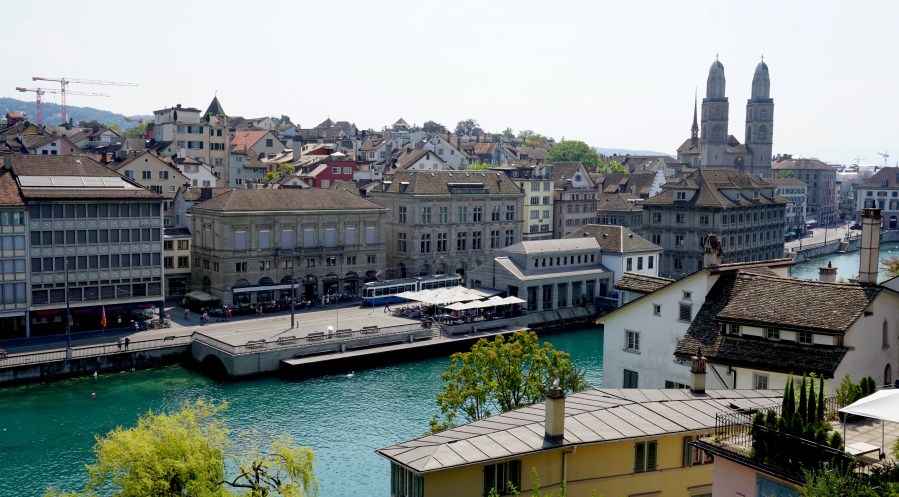
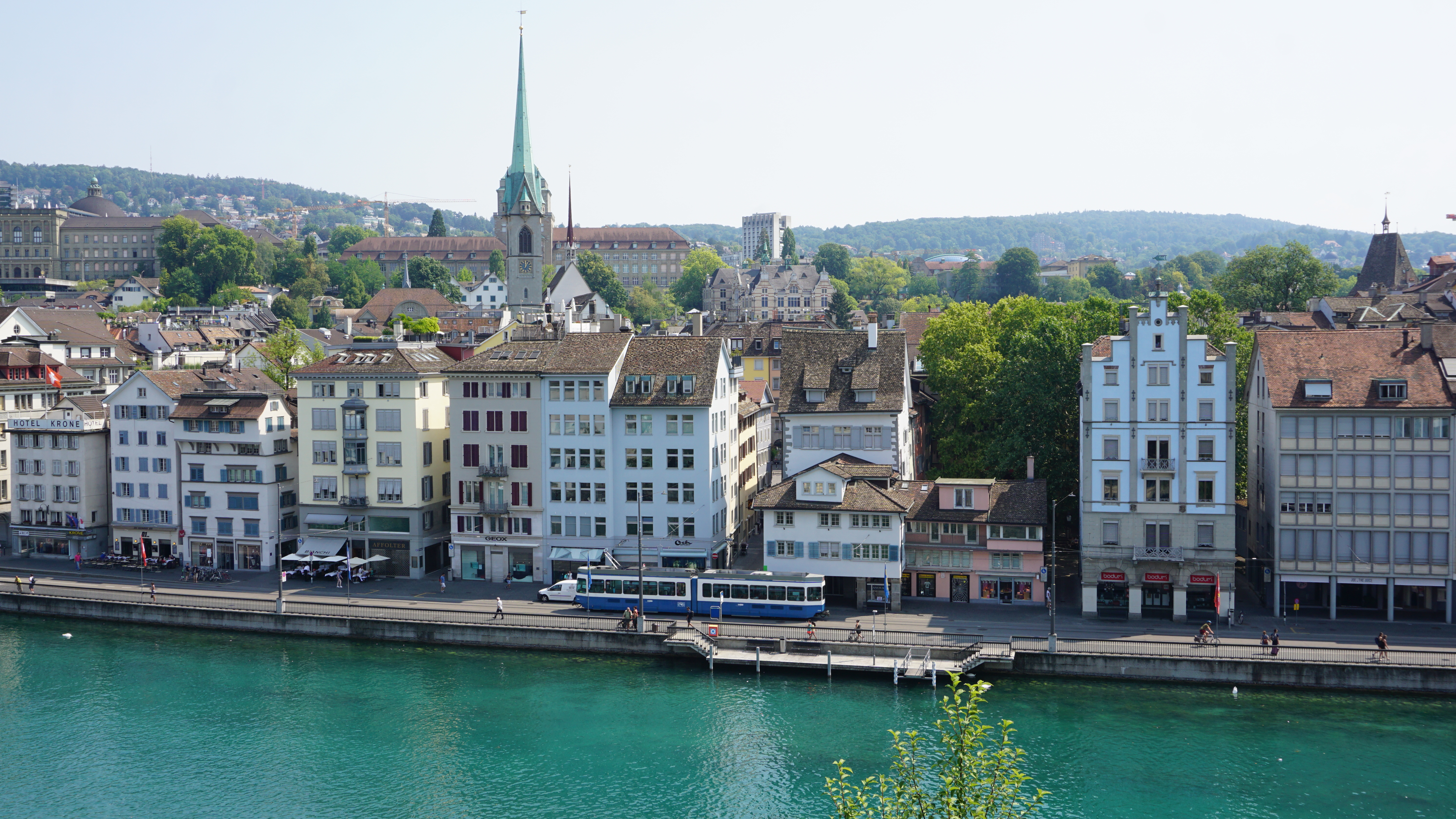 It’s a short walk from Bahnhofstrasse to Lindenhof, a beautiful urban park that offers stunning views of the Old Town, Grossmünster Church and Limmat River. It was once the site of a Roman fort, and five centuries later, a French palace. But these days, its attraction seems less about its history than its Instagram potential.
In fact, the entire city is an influencer’s dream: pastel pinks, yellows and blues blend together the houses lining the Old Town’s cobblestoned streets. It’s a calm and cohesive beauty, disrupted only by the sharp red and white of the Swiss flag, which hangs proudly from the exterior of many homes and buildings. Signs and plaques marking historical sites are subtle and scarce, adding to the overall class and cleanliness. Historical streets like Rennweg, once the widest street in Zurich, and Augustinergasse, one of the narrowest, are among the highlights. As I walked through the town, I noticed someone had even left a basket of free brioche on their porch, just to be kind. It was delicious.


As if this all weren’t romantic enough, Zurich is home to more than 1,000 water fountains of varying ornateness, each dispensing cool, potable spring water from the mountains. The city is quite rightfully very proud of its access to clean water. The Limmat River, which runs northwest through Zurich, is its own attraction. Famously turquoise and graced by pearl white swans, its almost impossible not to go for a dip on a hot summer day.


You can pay CHF 8 (Swiss Francs) to change into your swimsuit at a station on Utoquai or you take go further on the lakefront to Seefeldquai and find privacy in a bush for free. There are plenty of beautiful, public spaces along the water there to lay out a towel, eat some gelato, soak up the sun, and swim. As Nathan pointed out, this is what a European city can look like when it has never been destroyed by war.
CHEESE AND CHOCOLATE
 We capped off the afternoon with a visit to the Zurich Hauptbahnhof, the largest railway station in Switzerland. Upwards of 2,000 trains depart daily, and its underground shopping arcade is reputed to have been a hub for drug dealing after its construction — although I couldn’t find any credible sources on that topic. I bought a single coffee-flavoured truffle from ShopVille’s Läderach, a staple Swiss chocolatier, for the equivalent of about five Canadian dollars. It was a warm up for another expensive Swiss staple: cheese fondue.
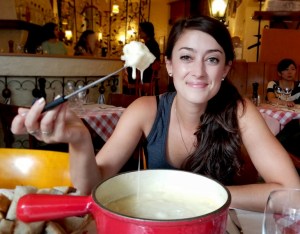 We made our way to Raclette Stube in Zurich’s Old Town. At CHF 28.80 per person for the standard fare — gruyère and vacherin mixed with wine and Kirsch brandy — I’d consider it among the more affordable raclette restaurants in the city. It was sharp, creamy, rich and filling, served with bread and potatoes. It was everything I had hoped it would be, after looking up so many mouthwatering pictures of cheese fondue ahead of my arrival. It was the only thing I insisted we do during my visit, and no trip to Switzerland is complete without it, so save your pennies and splurge. Thank you, Nathan for indulging me!
 I sipped on Rivella, an iconic Swiss milk serum-based soda drink (not my favourite thing) to wash it down as we walked through what was once the city’s red light district, and today, is considered the hub of Zurich’s nightlife. Online, Langstrasse is now identified as the ‘Creative Quarter’, evidence of its gentrification over years in an attempt to rebrand the neighbourhood and attract a certain kind of business to its illuminated streets.
Expensive boutiques are now as much a part of Langstrasse as the shisha bars, Latin nightclubs and international restaurants that line its sidewalks. Even on a Sunday night, the District 4 neighbourhood was alive with music, young people, old people, rich people, poor people, all people — quite unlike the mix one might finding shopping on Bahnhofstrasse. We strolled through Bäckeranlage, a beautiful green space in the heart of the neighbourhood. In the purplish, pink glow of dusk, youth played soccer, while others gambled by park benches.


Day Two: An Afternoon in Lucerne
I clenched my teeth as the dispenser at Hauptbahnhof printed my roundtrip ticket to Lucerne — CHF 50 altogether, or 70 Canadian dollars. The ride would be less than an hour each way, but in the end, it was worth every franc.
THE INSIDE OF A SNOW GLOBE
The Swiss countryside is famously stunning: blowing green fields, charming cottages, red-tiled rooftops, steepled churches — it felt like the inside of a snow globe, with a smattering of solar projects. Fresh, turquoise lake water ran parallel to the tracks all the way to Lucerne, which itself, is probably the most postcard-perfect place I’ve ever been.

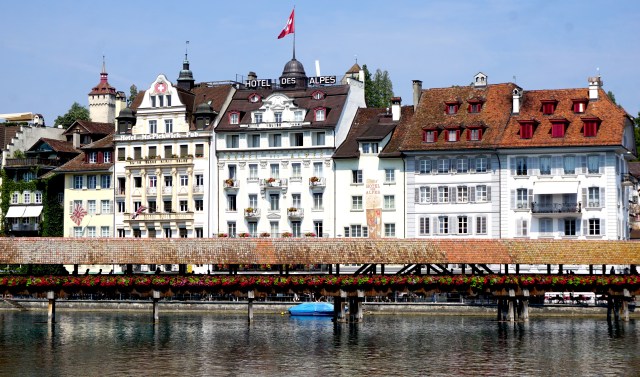
The iconic, flowered Kapelbrücke is the first thing you see when you exit the train station. The timber footbridge, now more than 650 years old, crosses the sea green River Reuss on a backdrop of tree-covered hills and Renaissance castles. Its ribboned water tower predates the bridge as a lookout post for monitoring Lucerne’s bay, and at different times in history, has been used as a prison, treasury, armoury and archives. It’s super Instagrammable, and great for the art history buffs: the ceiling contains 158 painted scenes from the 17th century, most of which were restored or replaced after a devastating fire in 1993. Click here for some spoiler 360° panorama views, courtesy of the municipality.


Like Zurich, Lucerne is a city of wonderful colours. Stylistically seamless, even the restored buildings in the trendy Bruch quarter are decorated with 19th and early 20th-century murals, in keeping with the popular façade choices of old. The only thing missing is the Bruchstrasse cattle market, which was gradually replaced by boutiques and restaurants after its closure in 1971. Today, nothing even close to the Old Town is allowed to crumble or smell like animals. But some remnants still do exist from Lucerne’s confederacy days, like this stone house built in 1689, visible on the walking path to the Musegg Wall (right).


The Musegg Wall is a short walk from the Chapel Bridge, overlooking the bay on the north side of the River Reuss. The impressive fortification, built around 1400, stretches 800 metres and was expanded over the years to include the nine stone towers are still standing today. It’s a spectacular view of the city that can’t be missed, especially when admission is free. You may even catch a glimpse of some of the endangered occupants of the wall: its original stone provides a special habitat for jackdaws, bats and common swifts among other creatures.


LIONS, AND LLAMAS AND SWANS, OH MY!
Directly behind the wall is Hinter Musegg Farm, built on land that has been cultivated for more than 400 years. It’s worth swinging by if you’re already at the wall, just to smell the coffee, visit the chickens, pet the goats, and meet the llamas.
About 10 minutes’ walk from the farm, you’ll find the sculpture touted by Mark Twain as “the most mournful and moving piece of stone in the world.” The forlorn and mortally-wounded Lion of Lucerne was hewn between 1820 and 1821 in memory of the Swiss soldiers who died defending King Louis XVI in Paris from revolutionaries storming the castle almost three decades earlier. More than a million tourists visit the site each year, so line up and get your camera out.


Unwilling to pay restaurant prices in the Aldstadt, Nathan and I grabbed lunch at the Coop Supermarkt near the stone memorial. We walked toward the water, stopping briefly to admire the Hofkirche St. Leodegar, built on the site of a monastery that was first established by Southern Alemanni noblemen around 735. Over nearly a thousand years, the site has been seized, sold and redeveloped. In 1633, a fire destroyed the Roman basilica that stood there, and today, only the two original towers from the 17th century structure remain.
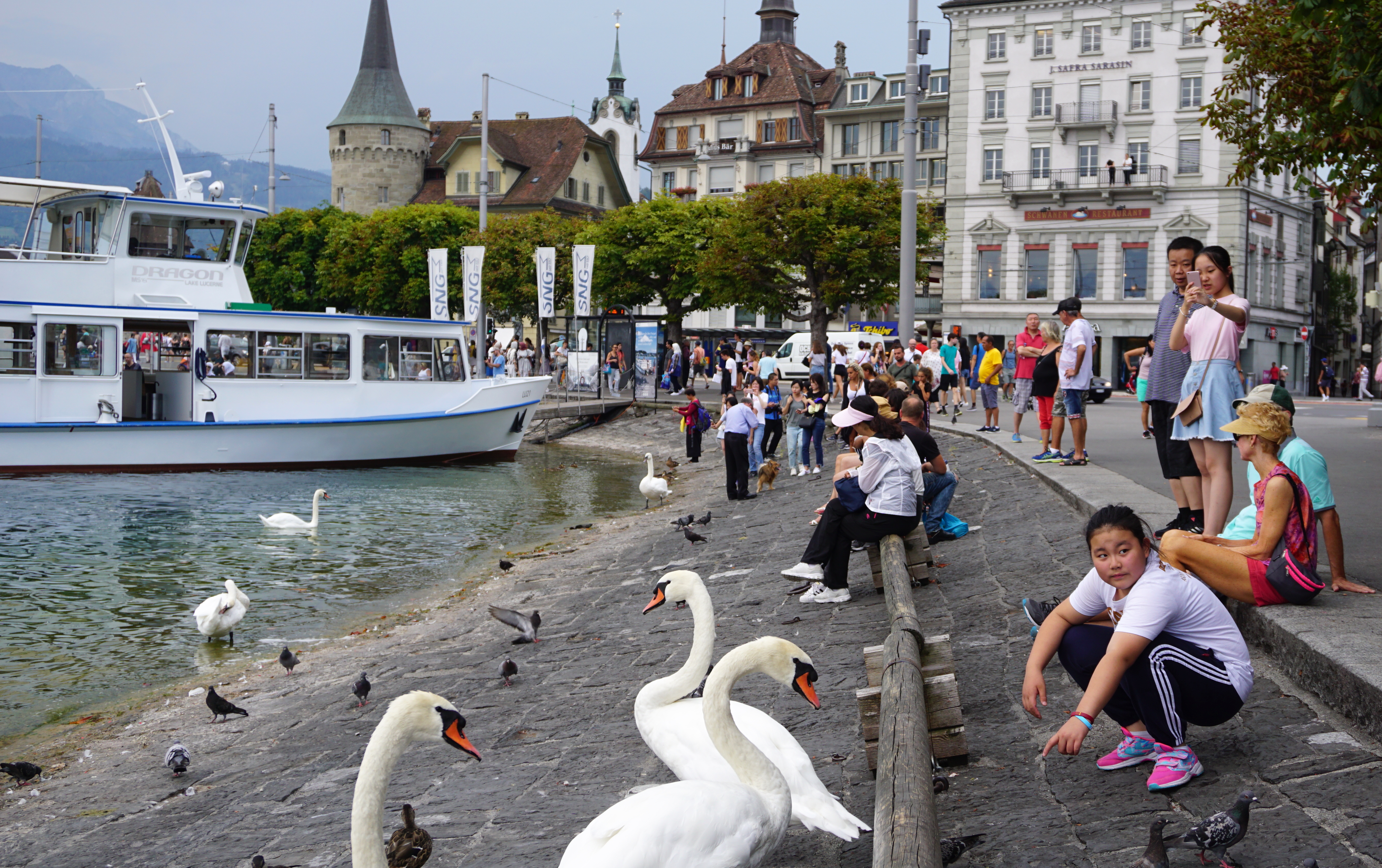 We followed the bay back to the Kapelbrücke and the Hauptbahnhof, where we would catch the 5:30 p.m. train back to Zurich. We paused only to take some selfies selfies with Lucerne’s iconic white swans before capping the night off with a couple of very average beers — Switzerland’s Eidgenoss and Belgium’s La Torpille. I packed up my bags for my next stop in Europe and


Day Three: Zurich to Munich
I made it to the Zurich Central Bus Station with just seven minutes to spare before my 11 a.m. FlixBus ride to Munich. I bade my host and good friend Nathan a very warm goodbye. I didn’t know when I’d see him again.
I kept the tears back on my way to meet another friend in Germany, and start the next chapter of my Europe road trip, which you can follow by clicking here.

Know Before You Go: Zurich & Lucerne
Travel Tips
- Public transit is the easiest way to get around Zurich. It costs CHF 6.80 to take the train from the airport into town, but a zip around the city will set you back about CHF 4.40. Each stop has a ticket dispenser where you can pay with cash or credit card, and a map of the routes and zones. Much of what you’ll want to see is in Zone 110.
- Get to the train station early if you’re going to Lucerne. You’ll want plenty of time to make sure you can get a window seat and the departure time of your choice. A single day is enough to see the city.
- FlixBus is a reliable, affordable and flexible service in many European countries.
- While I immensely enjoyed my time with my dear friends, neither Zurich nor Lucerne are cities I would prioritize if you’re trying to plan an epic, multi-day trip through Central Europe — especially on a budget.

 Elizabeth Around the World